How is dining in Honolulu laid out?
Honolulu is a city of neighborhoods strung along the south shore of Oʻahu. Waikīkī is the resort district at the east end, with hotel dining rooms and busy beachfront terraces; our Waikīkī restaurants guide covers it separately. West of it are Ala Moana and Kakaʻako, then Downtown and Chinatown by the harbor. Inland and east are Mōʻiliʻili, McCully and Mānoa around the University of Hawaiʻi, and Kaimukī and Kapahulu at the foot of Diamond Head.
Distances are short, often ten to twenty minutes by car, but traffic and parking decide how a night goes. Pick one neighborhood per evening rather than trying to stack two, and plan around the rush hour on the main roads out of town.
Chinatown and Downtown
Chinatown is one of the oldest parts of the city and still one of its most interesting places to eat. By day it is open-front markets selling fish, produce and noodles, lei stands, bakeries and lunch counters serving Chinese, Vietnamese and Filipino food. By night the same blocks fill with small dining rooms and cocktail bars. On the first Friday of each month the arts district holds an evening gallery walk, and the streets get crowded.
Downtown, next door, is the business district. It is busy at weekday lunchtime and much quieter at night and on weekends, when many lunch places are closed. Come for markets and lunch in the morning, or for dinner in Chinatown with a reservation, and use a public garage rather than circling for street parking.
Kakaʻako, Ward and Ala Moana
Kakaʻako has changed fast. Old warehouse blocks with large outdoor murals now sit beside new residential towers, with breweries, cafés, ramen and poke counters and newer dining rooms in between. It is casual, and many places are walk-up. The Saturday farmers market in the area is covered in our Oʻahu farmers market guide.
Ala Moana is anchored by one of the largest open-air shopping centers in the country, with a food hall and many sit-down restaurants under one roof. For a mixed group with different tastes and a parking garage, it is the easiest option in town. Ala Moana Beach Park across the road is a calm place to watch the sunset before dinner.
Mōʻiliʻili, McCully, Kaimukī and Kapahulu
Around the university, Mōʻiliʻili and McCully are packed with small Japanese, Korean and other Asian restaurants: ramen shops, izakaya, barbecue and noodle houses, many open late and priced for students and residents. Parking is tight, and some of the best rooms are tiny and do not take bookings.
Kaimukī, along Waiʻalae Avenue, is a neighborhood main street with bakeries, cafés and chef-run dining rooms that many residents treat as the city’s most dependable dinner strip. Kapahulu Avenue, starting at the Diamond Head end of Waikīkī, is known for malasadas, shave ice, plate lunch and long-standing local spots. Both are a short ride from Waikīkī hotels.
What to eat in Honolulu
Local food is the place to start: plate lunch with rice and macaroni salad, poke by the pound, saimin, loco moco, Spam musubi, malasadas and shave ice. Honolulu’s Japanese, Chinese, Korean, Filipino and Vietnamese communities shape the menus as much as anything Hawaiian, and the city has a long tradition of chefs cooking with island fish, beef and produce.
For fish, ask what was landed that week and how it is cooked. Ahi, aku, ono, mahimahi and opah all appear on menus, but availability changes with the season and the boats, and a good kitchen will tell you honestly what it has.
Reservations, parking and getting around
Book ahead for Friday and Saturday dinners and for any group of six or more. Many popular neighborhood places are small, and some only take walk-ins, so arrive early or accept a wait. Kitchens outside Waikīkī often close earlier than visitors expect, especially on Sunday and Monday.
Parking is the main headache. Expect paid garages, metered streets and full lots at peak times. Rideshare is the simplest option for a dinner with drinks, and TheBus covers most of these neighborhoods. The Skyline rail line does not yet reach Downtown, Kakaʻako or Ala Moana, so it will not help with a dinner in town.
Groups, families and when to eat in
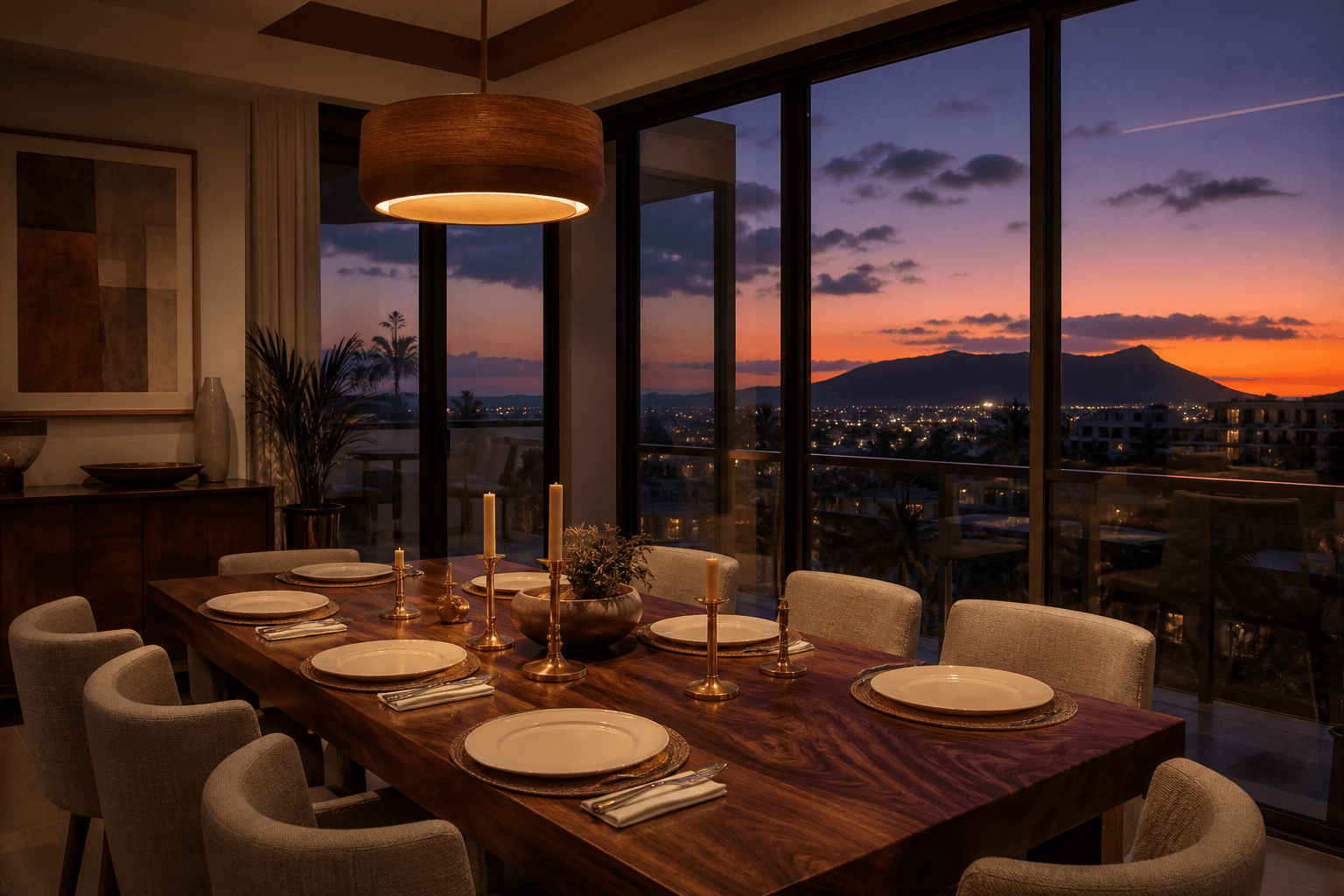
A table for two is easy in Honolulu. A table for ten on a Saturday is not. Large groups are often put on set menus, split across two tables or seated early. If your group is staying in a Honolulu condo, a Kahala house or a home near Diamond Head, one or two nights at home usually make the week easier, especially after a day at the beach or a long flight.
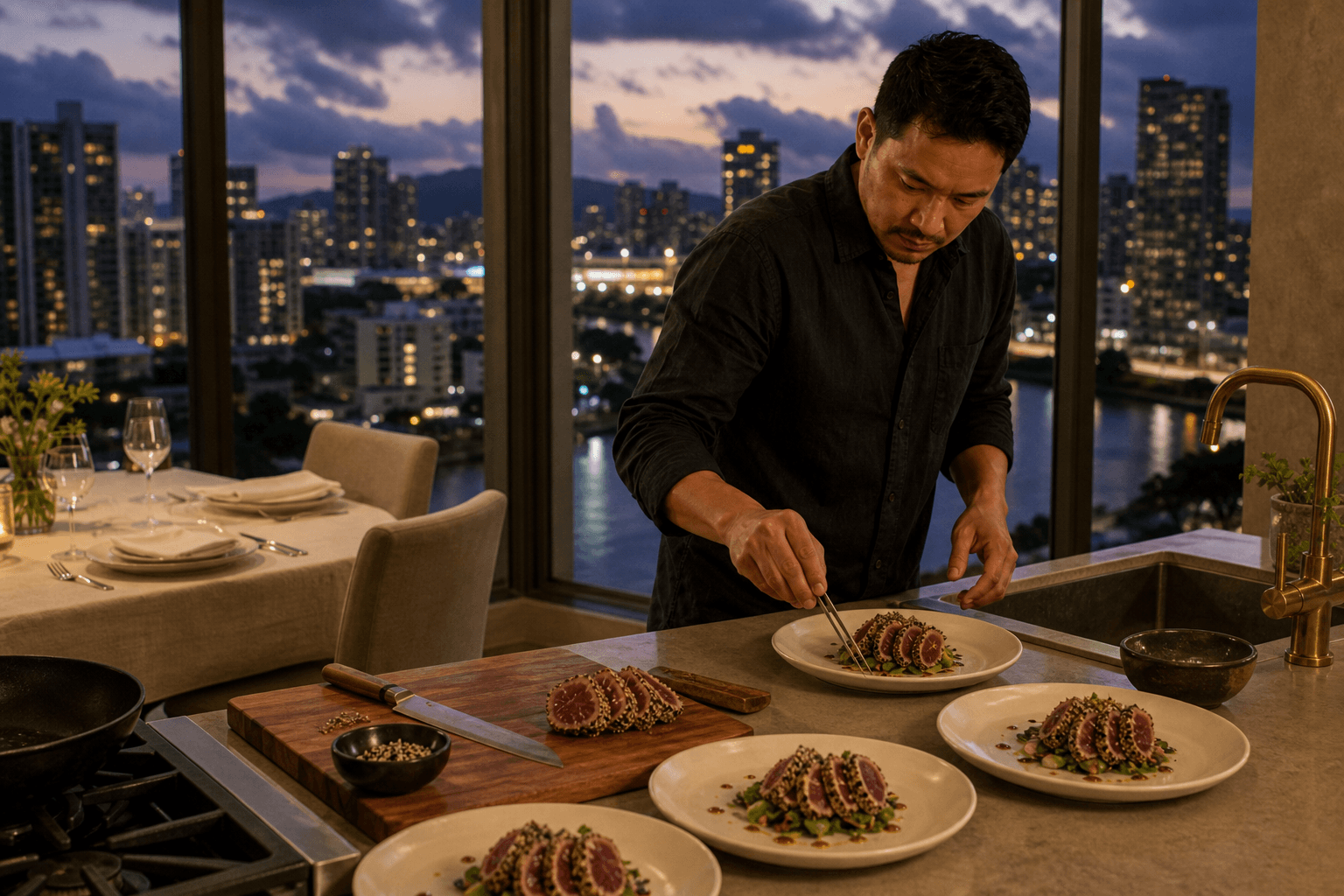
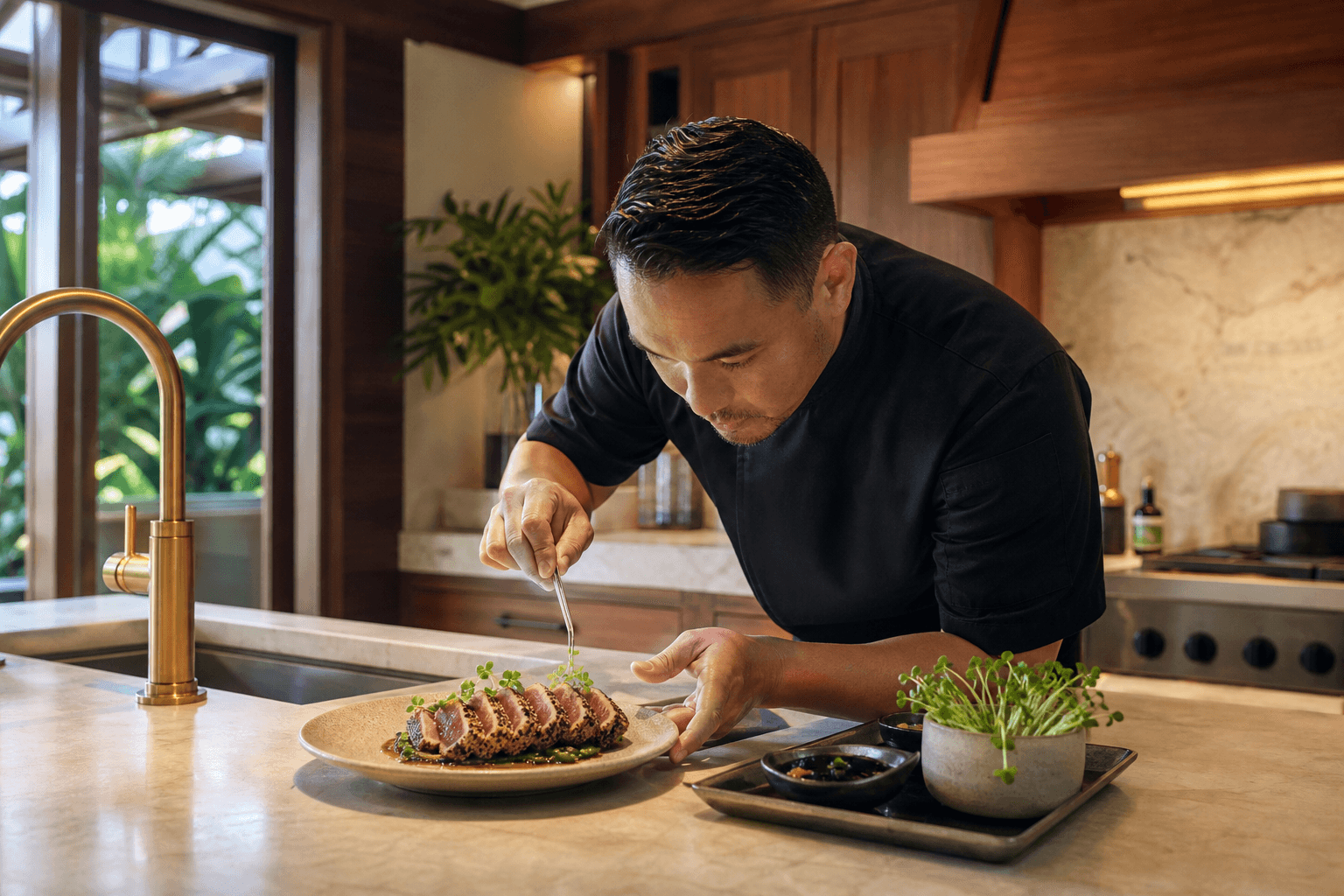
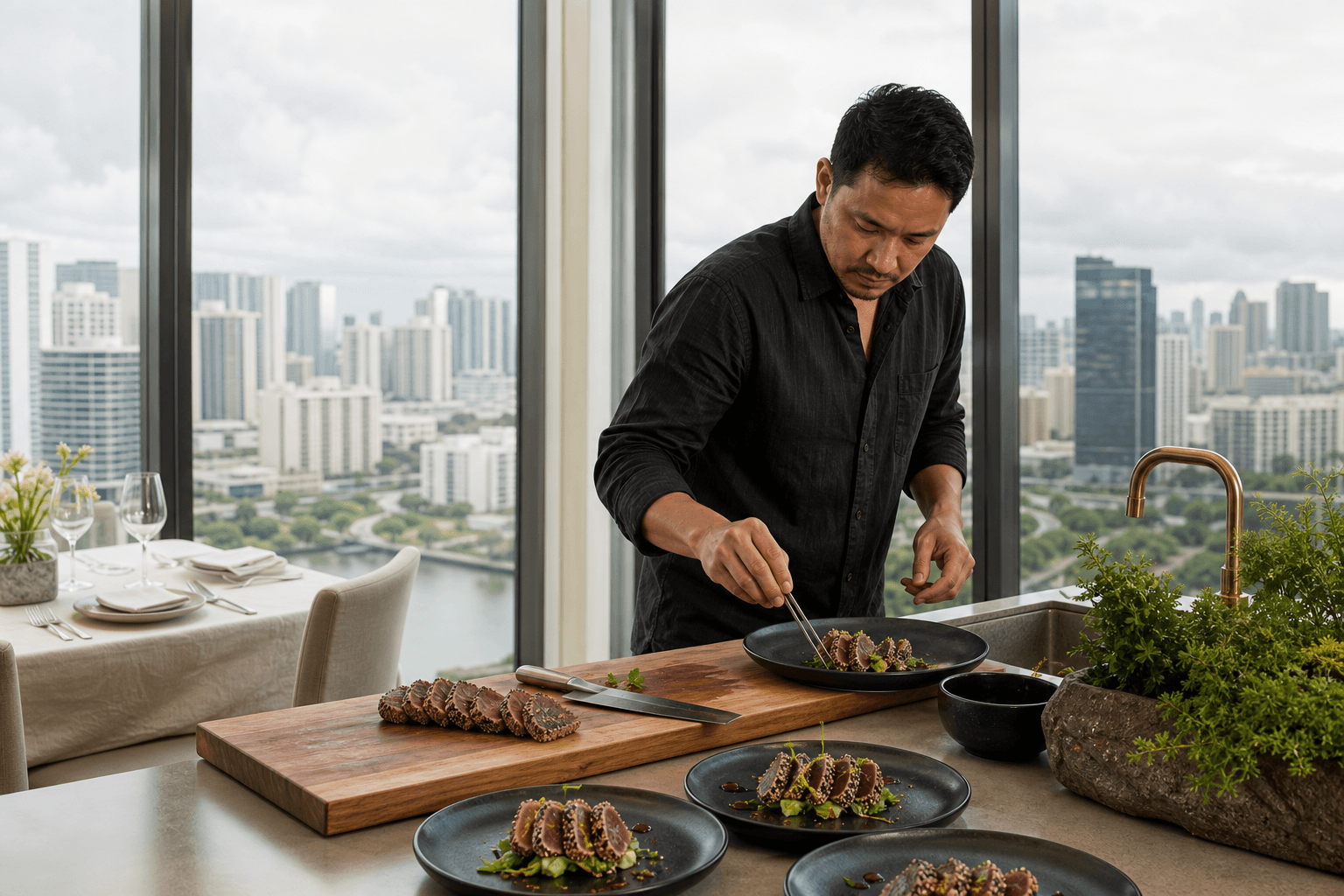
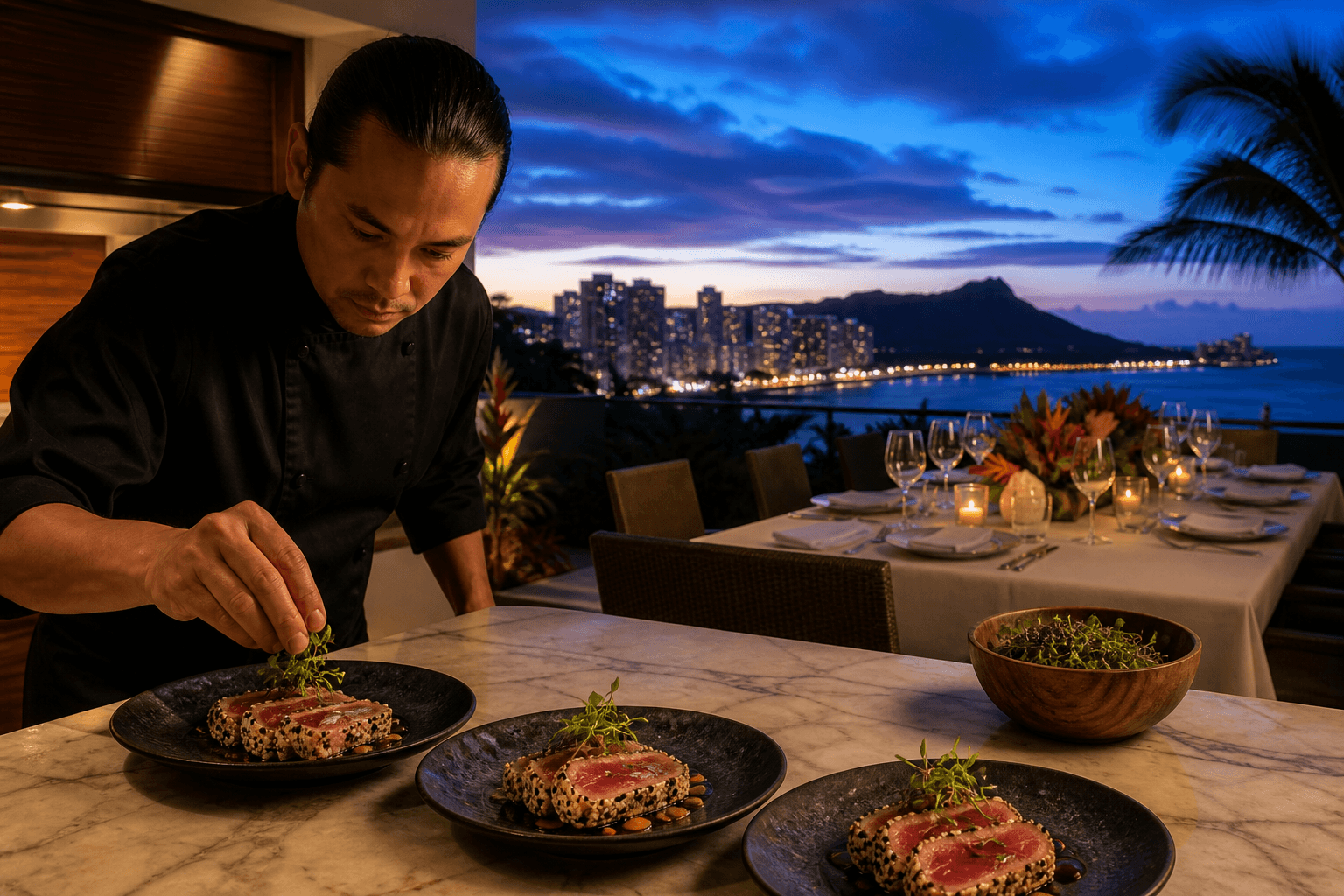
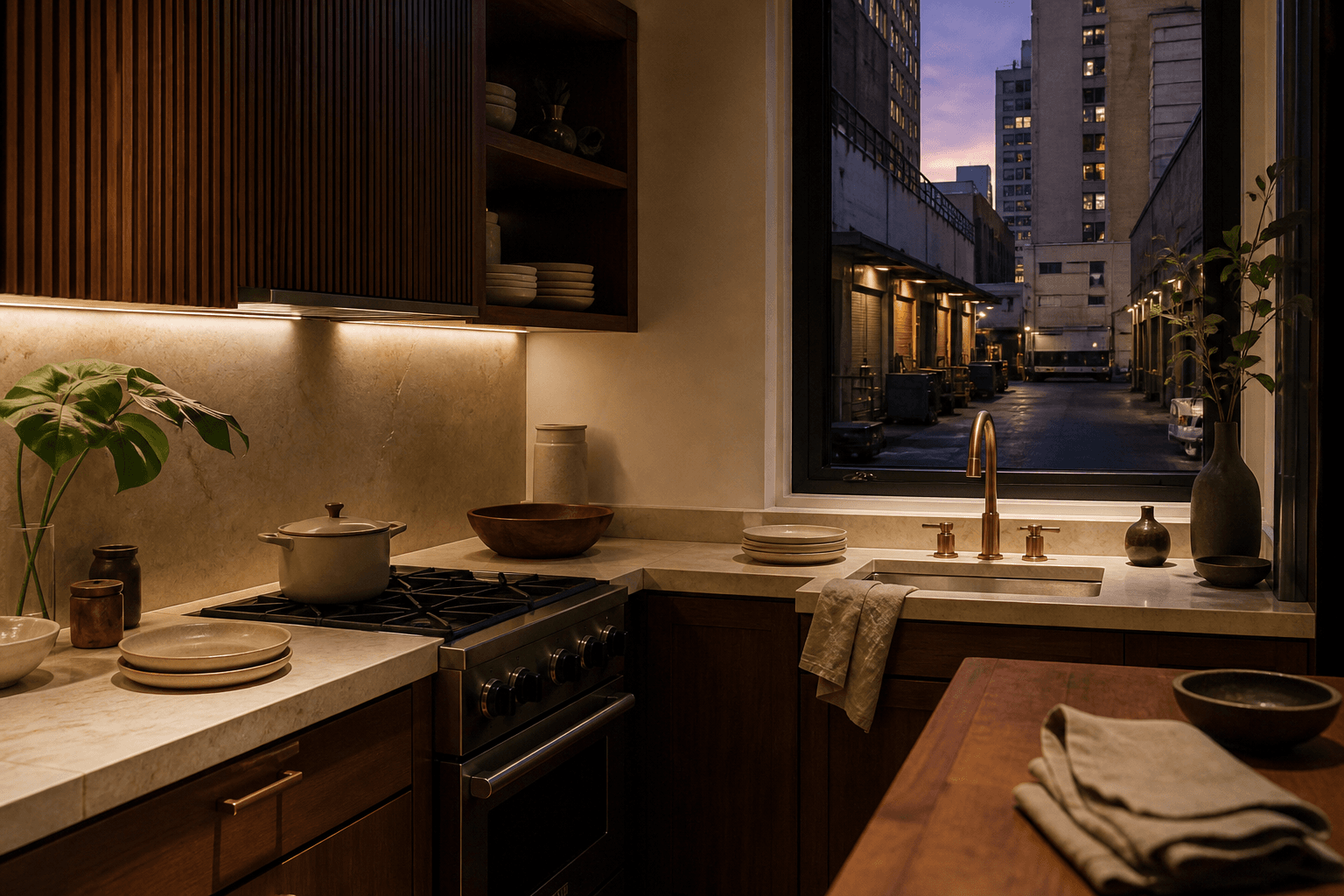
That is what a private chef Honolulu dinner is for. It is planned with you before the trip, shopped that day, cooked and served in your kitchen, and the kitchen is cleaned before we leave. Fish is named as the species we actually bought. Our Honolulu dinners page explains how we work in town residences, including tower kitchens with a compact range.
Birthdays, reunions and bigger parties
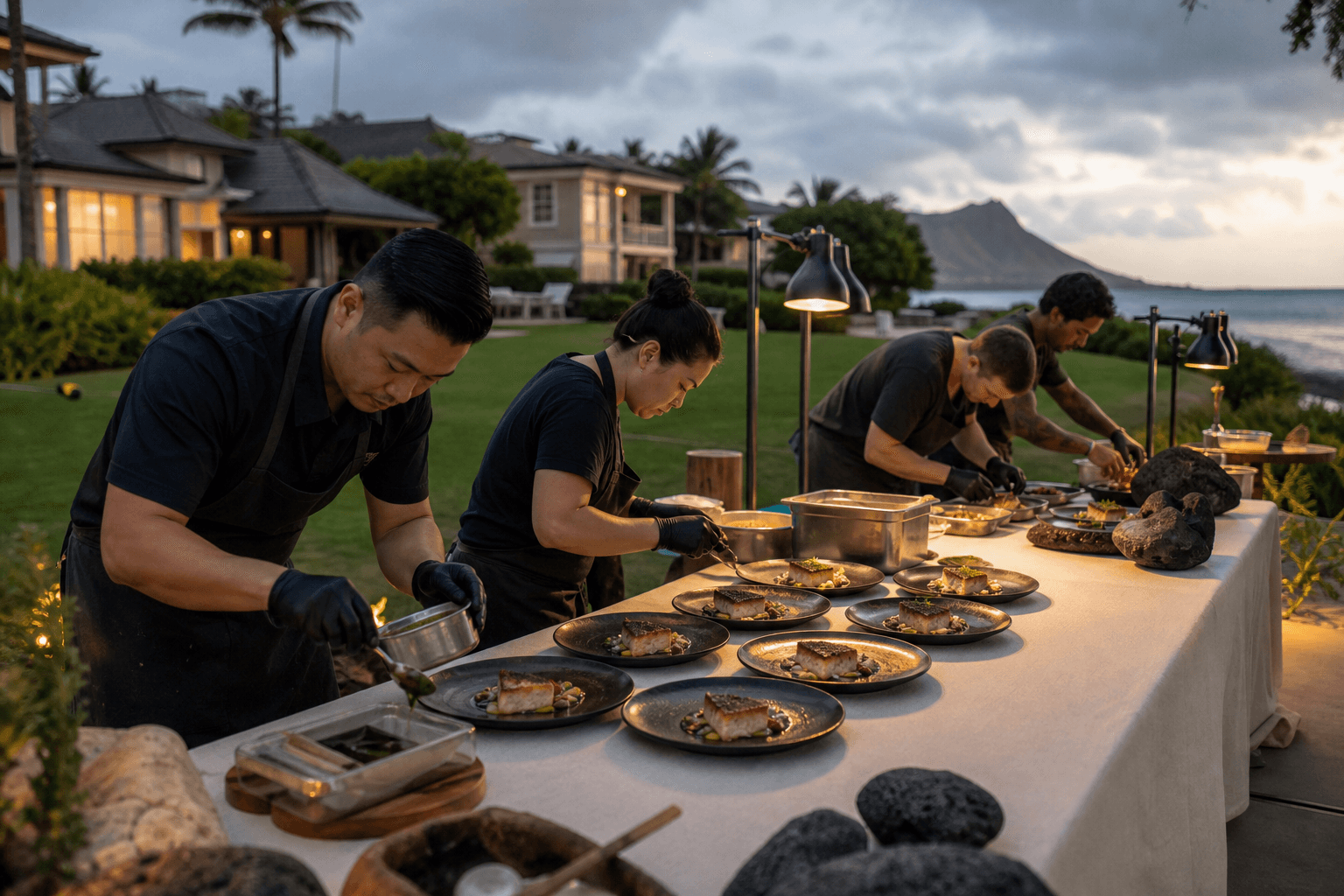
When the guest list passes about ten people, or you want a party rather than a dinner, Oahu catering is the staffed version, with servers at $80 an hour and a sous-chef at $105 an hour on four- to five-hour minimums, each on its own line. Tables, linens, tents and rentals are not included unless you ask, and then they are quoted separately.
What does a dinner at home cost with us?
Signature dinners on Oʻahu are published at $195–$290 a guest with groceries included, for a minimum party of six, and a dinner for two starts from $675 per event. A 20% service charge and Hawaiʻi GET of up to 4.712% are added as their own lines, a 50% deposit locks the date and gratuity is voluntary. North Shore and Turtle Bay addresses carry a published travel line from $75; Honolulu is in our base zone. The full card is on Oahu private chef cost.
How to plan a night in
Send the address where you are staying, the date, the guest count and any allergies through the quote form, or message us on WhatsApp at +1 808-468-7748. We reply in writing with a menu direction and a total. For dinners anywhere on the island, see private chef Oahu.